
Tilton Railway Cutting
This is a site where we observe, not collect. Leave nothing but footsteps.
Location
*Click on the map below to get directions*
OS Map Reference
SK 761055 (Sheet 141)View on What3Words

Know before you go
Dogs
When to visit
Opening times
Always openBest time to visit
SpringAbout the reserve
|
Tilton Railway Cutting has been named as the place where Sir David Attenborough first discovered his love for natural history. Tilton Railway Cutting features in 'Lost Worlds, Vanished Lives' (episode 1) and 'A Life On Our Planet' with Sir David Attenborough: Lost Worlds, Vanished Lives - 1. Magic in the Rocks - BBC iPlayer Watch David Attenborough: A Life on Our Planet | Netflix Official Site
Walking along Tilton Cutting is walking back in time – to the age of the dinosaurs and beyond. The cutting was dug in the 1870s for the railway from Melton Mowbray to Market Harborough, until 1965 when the line was closed. Now, the site is managed for both its wildlife and geological interest. We are working to make clear fresh exposures of rock, to make access to the cutting easier and safer, and to improve the area for wildlife. As you walk along, you’ll notice how sheltered, protected and peaceful the cutting is. You’ll be able to hear a number of birds calling, especially in the spring, including great, coal and blue tits, willow warbler, robin and thrushes. Plants lining the cutting including cowslip, square-stemmed St John's-wort and a variety of grasses, sedges and rushes. Ferns on either side of the boardwalk include harts-tongue, male-fern, scaly male-fern and broad buckler fern. The sheltered conditions favour butterflies including brimstone, orange-tip and speckled wood. The exposed rocks are marine sandstones, ironstones and clays of Liassic (lower Jurassic) age and are about 200 million years old. Several lengths of the west facing side of the cutting are kept open for study. Tilton Cutting is the 'type locality' for a number of fossil species, including brachipods, gastropods and ammonites and for rocks which demonstrate the Tilton faunal sub-province. |
Habitat
Contact us
Environmental designation
Please note that hammering at the rock faces is strictly prohibited.
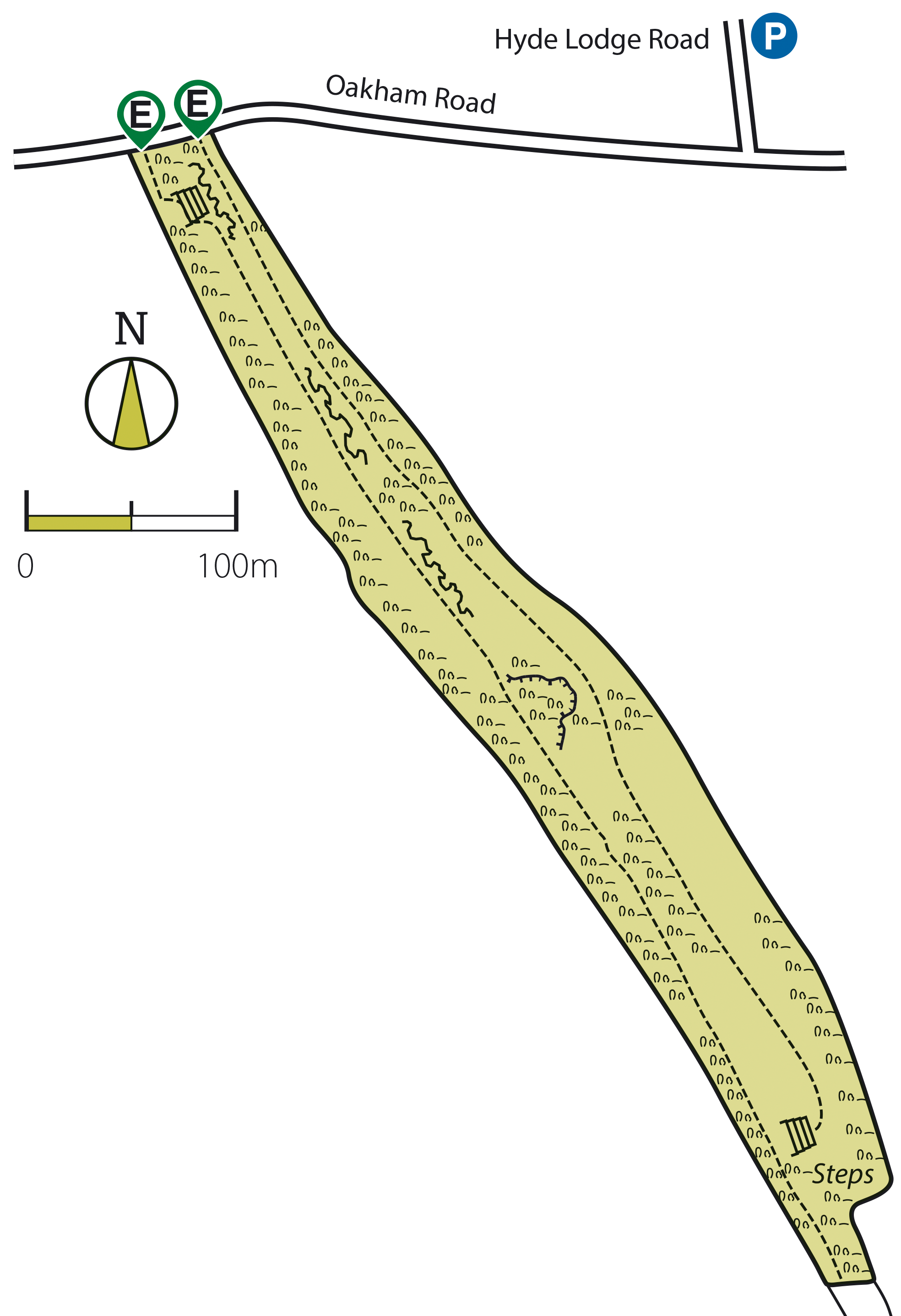
Reserve Map

Download Tilton Railway Cutting Nature Reserve Map
- Tilton Railway Cutting Map (1.16 MB)